
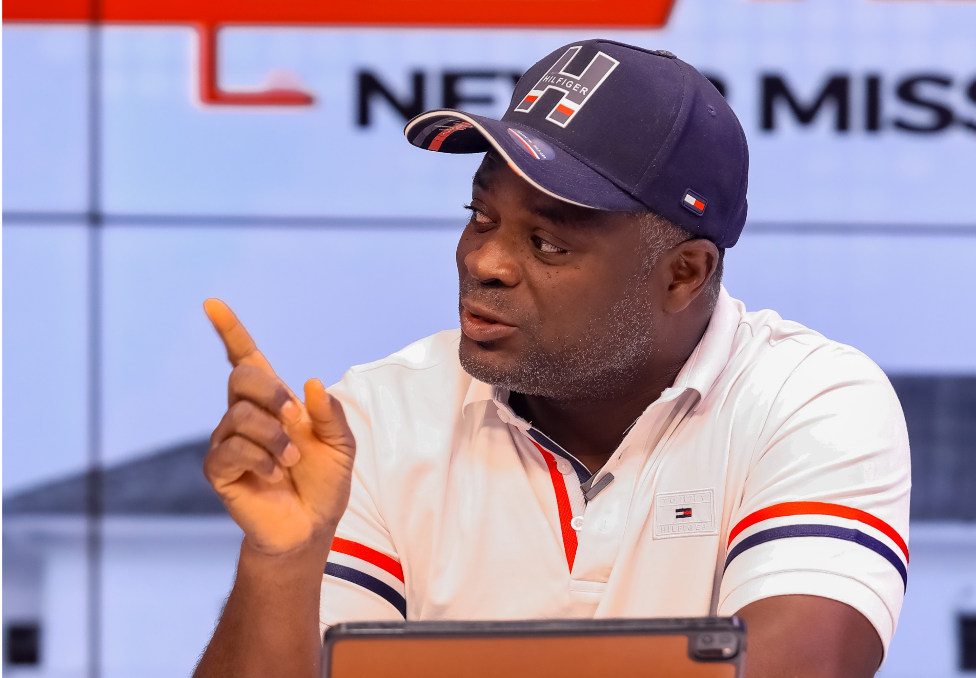

Legal practitioner Justice Abdulai has said the bribery scandal surrounding the Aksa Energy power plant deal exposes significant weaknesses in Parliament’s oversight role.
Speaking on TV3’s The Key Points on Saturday, August 15, he said Parliament should have exercised stronger scrutiny over the deal and related government processes.
“This deal exposes the weaknesses within our Parliament’s oversight responsibility,” he said.
Justice Abdulai also called on President John Dramani Mahama to act swiftly to address the matter, noting that the allegations relate to a period when Mr Mahama was president during his first term.
He urged the government to ensure that the matter is fully investigated and that anyone found culpable is held accountable.
“My call to the president is this: act swiftly, decisively, and ensure that this matter is nipped in the bud,” he said.
He added that Ghana needs a swift criminal investigation into the alleged bribery scheme.
Kofi Bentil: Ghana Knows Officials Allegedly Involved
Private legal practitioner Kofi Bentil, who also appeared on the programme, said Ghanaian authorities already know the identities of officials allegedly connected to the bribery scheme.
According to Mr Bentil, Ghanaian authorities previously worked with their US counterparts on the investigation and the relevant information was handed over to the current government when the previous administration left office.
“The US knows the identity. Ghanaian authorities know the identity of these people,” he said.
He questioned why the United States appeared more determined to pursue the corporate actors involved than Ghana was to investigate the alleged beneficiaries of the bribes.
Former TOR Boss Convicted in US
The comments follow the conviction of Asante Kwaku Berko, a former Managing Director of Tema Oil Refinery (TOR) and former Goldman Sachs banker, by a federal jury in Brooklyn, New York.
The US jury convicted Berko on charges including conspiracy to violate the Foreign Corrupt Practices Act (FCPA), violating the FCPA and money laundering conspiracy.
According to the US authorities, Berko conspired to pay more than US$1 million in bribes to multiple Ghanaian government officials between 2014 and 2015 in connection with the development and financing of a power plant in Ghana.
The project involved Aksa Enerji Uretim A.S., a Turkish energy company and Goldman Sachs client.
Prosecutors alleged that Berko and his associates paid bribes to officials at different levels of the Ghanaian government to help Aksa secure the contract to develop and operate the power plant.
Berko was convicted following a nine-day trial before US District Judge Diane Gujarati and faces a maximum sentence of 30 years in prison. He has been remanded pending sentencing, which is scheduled for November 10, 2026.
OSP Assisted FBI Investigation
Ghana’s Office of the Special Prosecutor (OSP) has confirmed that it assisted the US Federal Bureau of Investigation (FBI) with the investigation and prosecution.
In a statement, the OSP said its assistance was provided through Ghana’s established mutual legal assistance framework and had been acknowledged by the US Department of Justice as providing “significant assistance to this prosecution.”
The OSP described the case as an example of the importance of international cooperation in tackling cross-border corruption.
Ghana Moves to Investigate Local Officials
Deputy Attorney-General Justice Srem Sai has also disclosed that Attorney-General Dominic Ayine is working with US authorities to identify and prosecute persons in Ghana allegedly implicated in the bribery scheme.
The investigation relates to the 2014–2017 power plant development contract between the Government of Ghana and Aksa Enerji.
The conviction of Berko has therefore renewed calls for Ghanaian authorities to investigate the alleged recipients of the bribes and determine whether any officials or other individuals in Ghana should face criminal proceedings.
For Justice Abdulai, the case presents not only a corruption challenge but also a test of Ghana’s parliamentary oversight and accountability mechanisms.