

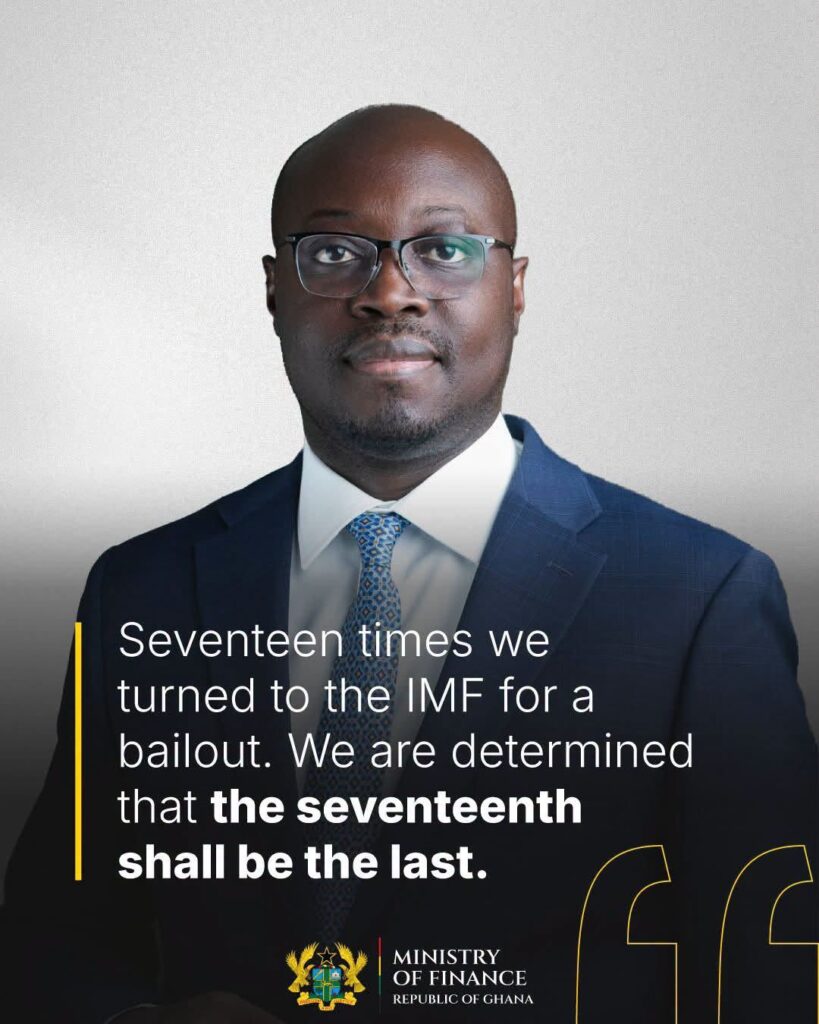
The government has reaffirmed its commitment to ensuring that Ghana’s 17th programme with the International Monetary Fund (IMF) will be the country’s final bailout arrangement with the Fund.
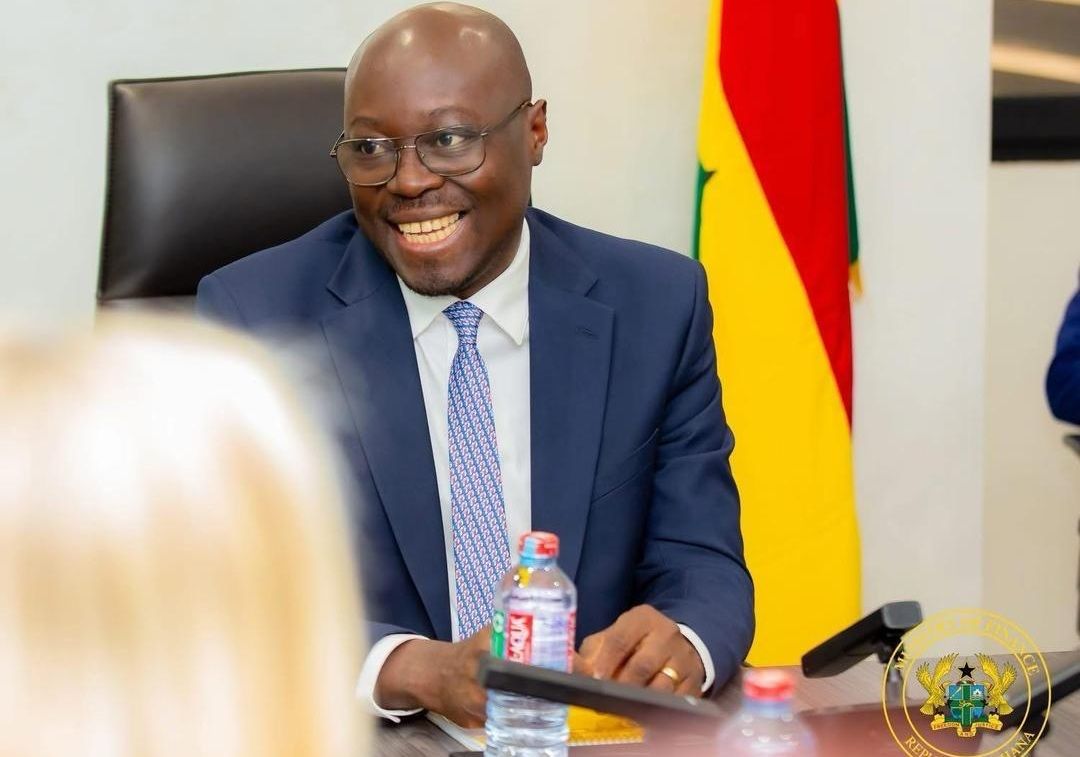
Finance Minister Dr Cassiel Ato Forson said the government is implementing measures aimed at restoring fiscal discipline, rebuilding economic resilience and creating an economy capable of sustaining itself without repeatedly turning to the IMF for financial support.
Government targets end to IMF bailout cycles
Dr Ato Forson said Ghana has reached a point where the country must break away from its recurring dependence on IMF programmes.
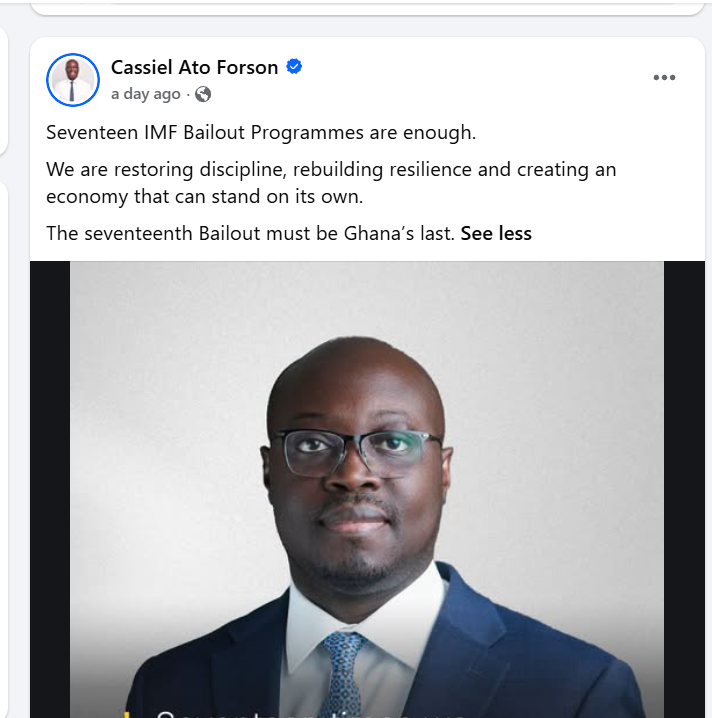
“Seventeen IMF Bailout Programmes are enough. We are restoring discipline, rebuilding resilience and creating an economy that can stand on its own. The seventeenth Bailout must be Ghana’s last,” he stated in a Facebook post.
The Finance Minister’s comments underline the government’s position that stronger fiscal management and economic resilience are necessary to prevent Ghana from returning to the IMF for future bailouts.
Bank of Ghana reports stronger banking sector
Meanwhile, Bank of Ghana Governor Dr Johnson Pandit Asiama has highlighted improvements in the country’s economic and financial conditions.
He said he was particularly encouraged by the continued strengthening of Ghana’s banking sector, noting that total banking sector assets increased by 30.7% in June 2026.
According to Dr Asiama, the increase was mainly driven by growth in deposits and shareholders’ funds.
Banks’ capital position improves
The Governor said the solvency position of banks has also improved significantly.
The Capital Adequacy Ratio (CAR) increased to 20.4% in June 2026, compared with 10.6% recorded a year earlier.
Asset quality also improved during the same period, with the Non-Performing Loan (NPL) ratio falling from 23.1% to 16.1%.
Dr Asiama attributed the developments to collective efforts by institutions within the financial sector.
“These developments reflect the collective efforts undertaken by the institutions represented here today,” he told bank chief executives during a meeting in Accra.
Private sector credit records strong growth
Dr Asiama also said financial conditions have eased considerably, with interest rates in the money market continuing to moderate across different market segments.
The improvement in financial conditions is beginning to support increased lending to businesses and other private-sector activities.
Private sector credit grew by 41.2% in June 2026, compared with 8.6% a year earlier.
Real private sector credit growth also reached 34.1%, which the Governor described as a significant development.
Fiscal discipline remains key to economic stability
The Bank of Ghana Governor further pointed to continued fiscal discipline as an important foundation for macroeconomic stability.
He said fiscal performance during the first quarter of 2026 generally reflected strong restraint in government expenditure.
This was achieved despite shortfalls in revenue and resulted in better-than-targeted balances on a cash basis, according to Dr Asiama.
He stressed that maintaining expenditure controls, improving revenue mobilisation, managing public debt prudently and sustaining fiscal discipline would remain essential to Ghana’s economic outlook.
“The continued commitment to expenditure restraint, revenue mobilisation, prudent debt management, and fiscal discipline will be critical to preserving debt sustainability, strengthening investor confidence, and reducing fiscal risks to the macroeconomic outlook,” he said.
The government’s pledge to make the current IMF programme Ghana’s last therefore comes alongside efforts to strengthen fiscal management, improve financial-sector resilience and create conditions for greater private-sector growth.