

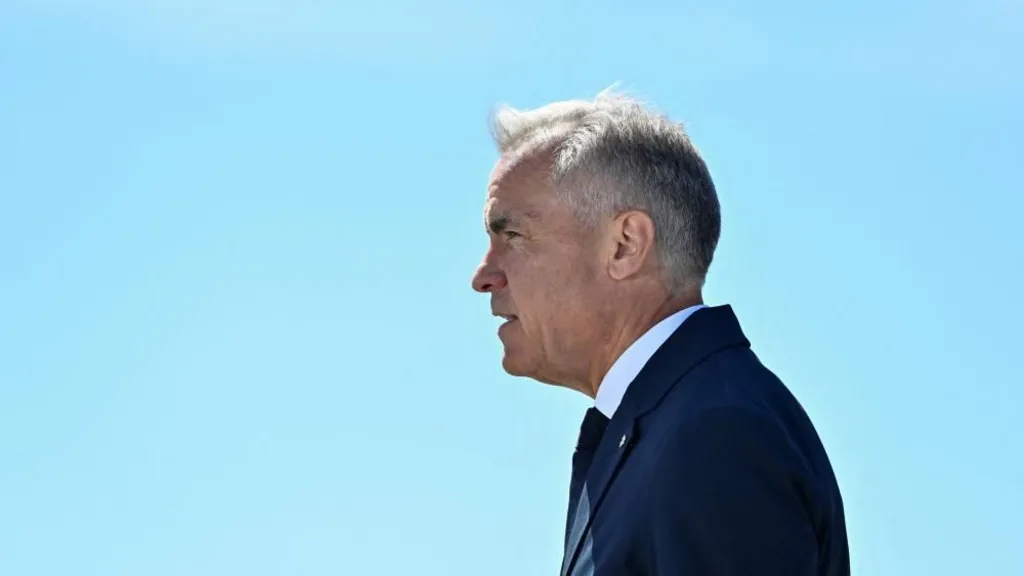

Trade negotiations between the United States and Canada have entered a critical stage, with Canadian officials working against a deadline to prevent a fresh round of tariffs from being imposed by the Trump administration.
Canadian negotiators have spent the past week in Washington attempting to reach an agreement before new 50% tariffs on about $20 billion (C$28 billion) worth of Canadian imports are scheduled to take effect on Wednesday.
The proposed measures would affect roughly 5% of Canada’s imports from the United States and have increased pressure on Prime Minister Mark Carney’s government to secure an agreement.
US-Canada trade talks enter final stage
Carney remained cautious when questioned about the negotiations on Monday, describing the discussions as “very delicate and intense.”
He said it was not appropriate to negotiate publicly while the talks were ongoing.
Although the Canadian prime minister maintained that his country was negotiating from a position of strength, the approaching tariff deadline has raised the stakes considerably.
Canadian and US officials have held a series of meetings in recent days, including discussions between Canadian negotiators and US Trade Representative Jamieson Greer.
However, the two sides had yet to reach a final agreement.
“Our job is not yet done,” Canadian Trade Minister Dominic LeBlanc said as he left Greer’s office on Monday.
Trump demands concessions from Canada
The negotiations have been described as difficult by officials on both sides.
US President Donald Trump has criticised Canada’s approach to the negotiations and warned that the United States could take an even tougher position if an agreement is not reached.
Among Washington’s demands are changes to Canada’s remaining retaliatory tariffs on American automobiles and adjustments to Canada’s dairy import quotas.
The US has also called for the removal of provincial restrictions on American alcohol sales that were introduced by several Canadian provinces in response to Trump’s earlier tariffs.
Canada seeks tariff relief for key industries
While the US is seeking concessions, Canada is pushing for Washington to remove or reduce tariffs affecting several major sectors of the Canadian economy.
These include:
- Steel
- Aluminium
- Automobiles
- Lumber
- Agriculture
- Manufacturing
Canadian officials argue that reducing the tariffs would provide greater stability for businesses and workers in these industries.
Ontario Premier Doug Ford has indicated that his province could consider restoring American alcohol products to store shelves if Canada secures an agreement that protects major Canadian industries.
“If we get a fair deal that will protect our steel sector, our auto sector, our forestry sector, our agriculture sector, our manufacturing sector, then we’d be happy to bring booze back on the shelves,” Ford said.
Alcohol restrictions depend on Canadian provinces
Any agreement concerning alcohol would require cooperation from Canada’s provinces because provincial governments control alcohol distribution within their jurisdictions.
Ford, who has frequently taken a firm position against US trade measures, has said the issue is conditional on Canada securing a satisfactory trade agreement.
Dairy remains a major sticking point
Canada could also face domestic opposition if it makes concessions on dairy.
The country’s supply-management system regulates production, pricing and imports involving dairy, eggs and poultry.
Trump has criticised the system as unfair to American farmers who want greater access to the Canadian market.
In Quebec, however, Premier Christine Fréchette has described the supply-management system as non-negotiable.
That could make any concession on dairy politically difficult for Carney’s government.
Canadians remain divided over trade concessions
The trade dispute has also affected public opinion in Canada.
A recent Abacus Data poll found that 74% of Canadians believe the trade dispute has affected their household.
The survey also found that 36% support Canada introducing additional retaliatory tariffs, even if doing so creates further economic difficulties domestically.
Only 18% supported concessions such as ending provincial restrictions on American alcohol in exchange for removing or reducing US tariffs.
Canada wants a deal but not at any cost
Canadian officials are therefore facing a difficult balance.
The government wants greater stability in its trading relationship with the United States, but it also faces pressure from Canadians who do not want Ottawa to make significant concessions to Washington.
Reports in Canadian media have indicated that Canada’s chief negotiator, Janice Charette, warned US officials that imposing the new tariffs could jeopardise future trade negotiations.
Carney has repeatedly said he would not accept an agreement unless it was beneficial to Canada.
However, he has not publicly defined what conditions would constitute an acceptable deal.
Carney plans to speak with Trump
With the deadline approaching, Carney said there would still be opportunities for further negotiations during the final 48 hours.
He also confirmed that he intended to speak with President Trump before the Wednesday deadline.
The Canadian prime minister said his government had plans in place for whatever outcome emerges if the negotiations fail.
The possibility of additional tariffs has heightened economic uncertainty in Canada, with opposition politicians demanding relief for businesses and households.
Conservative trade critic Shuvaloy Majumdar said Canadians had become frustrated with the country being repeatedly targeted in the trade dispute.
He nevertheless expressed hope that Carney would secure a meaningful result at the negotiating table.
For Canada, the immediate challenge is to reach an agreement that protects key domestic industries while avoiding further economic pressure from its largest trading partner.