


BY BoG Deputy Governor
Ghana’s digital payment ecosystem has reached significant scale, with the Bank of Ghana (BoG) calling for stronger coordination to unlock the next phase of financial innovation and expand access to finance for small and medium-sized enterprises (SMEs).
The Second Deputy Governor of the Bank of Ghana, Mrs Matilda Asante-Asiedu, made the remarks while delivering the Distinguished Digital Finance Lecture in Accra on Monday, August 17, 2026.
The lecture was held under the theme “Building Financial Systems That Innovate at Scale.”
Mrs Asante-Asiedu said Ghana already has the foundations needed to support large-scale financial innovation, adding that the next challenge is to coordinate existing systems and institutions more effectively.
“Ghana already has real foundations for scaled financial innovation. The task ahead of us is not invention. It is coordination.”
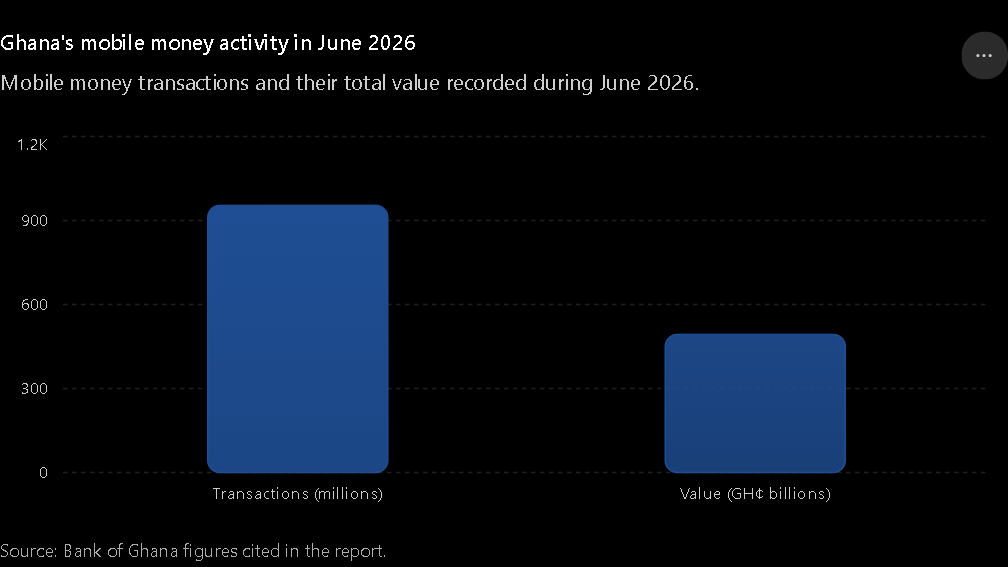
She highlighted the growth of Ghana’s digital payment infrastructure, noting that mobile money platforms processed 954 million transactions valued at approximately GH¢493 billion in June 2026 alone.
However, the Deputy Governor stressed that financial inclusion should no longer be measured simply by the number of accounts or digital wallets available to people.
She said the next phase should focus on ensuring that individuals and businesses can access credit, insurance and investment opportunities on fair terms and when they need them.
For SMEs in particular, deeper coordination across Ghana’s financial ecosystem could help address persistent financing challenges and create more opportunities for businesses to grow.
The lecture also reaffirmed the Bank of Ghana’s commitment to developing a financial system that is inclusive, secure, coordinated and capable of supporting Ghana’s economic growth ambitions.
Ghana’s mobile money activity in June 2026
Mobile money transactions and their total value recorded during June 2026.
However, the Deputy Governor stressed that financial inclusion should no longer be measured simply by the number of accounts or digital wallets available to people.
She said the next phase should focus on ensuring that individuals and businesses can access credit, insurance and investment opportunities on fair terms and when they need them.
For SMEs in particular, deeper coordination across Ghana’s financial ecosystem could help address persistent financing challenges and create more opportunities for businesses to grow.
The lecture also reaffirmed the Bank of Ghana’s commitment to developing a financial system that is inclusive, secure, coordinated and capable of supporting Ghana’s economic growth ambitions