


By Eugene Davis
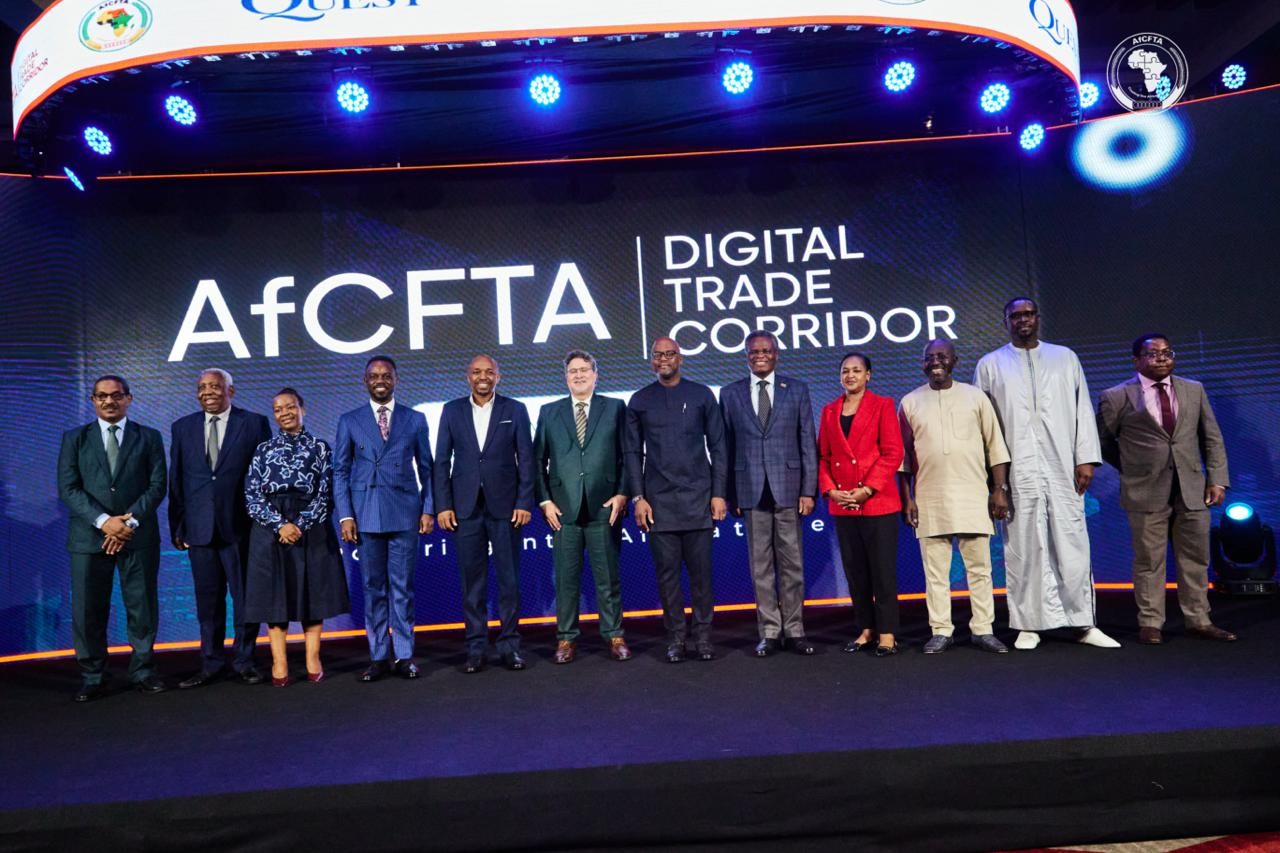
A continental digital trade corridor is taking shape as the AfCFTA Secretariat, Quest, and the Government of Seychelles advance plans to translate digital commerce rules into practical trading infrastructure.
Wamkele Mene, Secretary-General of the African Continental Free Trade Area (AfCFTA) Secretariat, confirmed that the initiative will translate the policy foundation established under the AfCFTA Protocol on Digital Trade into an operational mechanism for cross-border business transactions.
“What we are doing through this digital trade corridor is to begin translating the policy and regulatory foundation provided by the AfCFTA Protocol on Digital Trade into an operational mechanism through which businesses can actually transact,” Mene said.
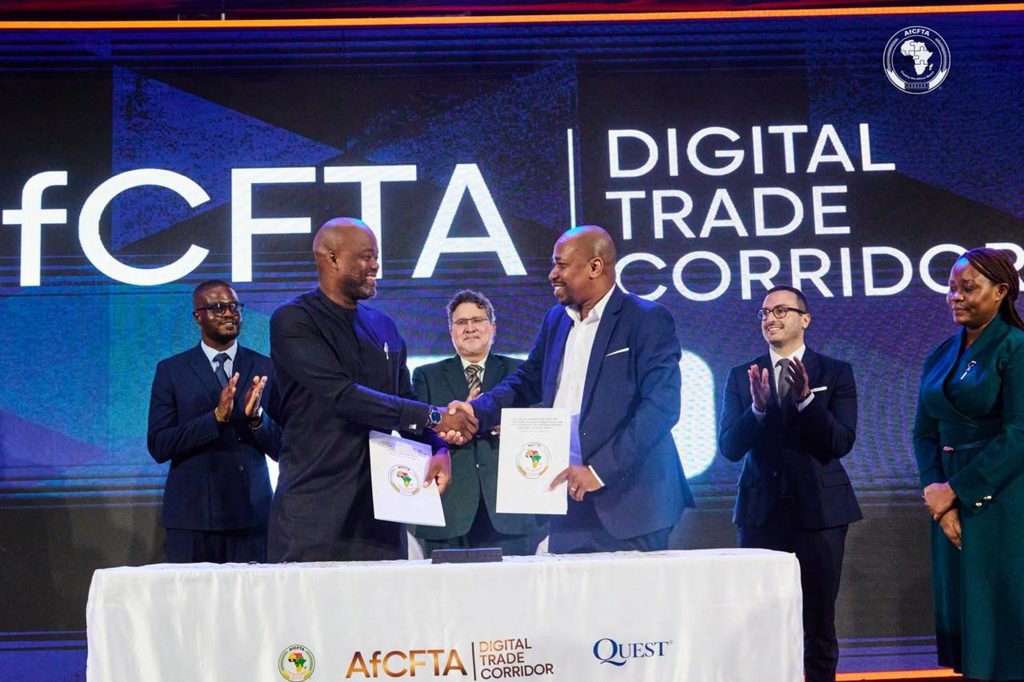
The announcement follows the execution of the Head of Terms toward a Joint Venture Agreement between AfCFTA Holdings Limited and Quest Seychelles Limited, marking a major step toward operationalising the AfCFTA Digital Trade Corridor (ADTC).
The framework is designed to facilitate, track, and settle cross-border transactions while creating an accessible environment for micro, small, and medium enterprises (MSMEs), women, and youth traders across the continent.
Scaling the digital trade corridor from pilot to continental network
Implementation of the digital trade corridor will begin with a pilot phase involving five to eight countries before expanding across all 55 African Union member states.
The initial three-year phase will focus on testing operational models, expanding transaction volumes, improving system interoperability, and building trust among financial institutions, logistics providers, and regulatory authorities.
The Secretariat plans to launch the platform formally in the first quarter of 2027, with the rollout designed to showcase live commercial transactions rather than serving as a purely ceremonial event.
While Africa maintains numerous trade agreements, businesses face persistent friction, including fragmented payment gateways, high currency conversion costs, and complex customs documentation. Establishing a unified digital trade corridor aims to resolve these operational bottlenecks by integrating trade finance, payment rails, and supply chain logistics.
Integrating payment rails and commodity exchanges
According to Philip Gamey, Executive Chairman of Quest Ghana, the initial deployment of the digital trade corridor will feature an Africa Minerals and Commodities Exchange.
This exchange will provide a structured marketplace for African agricultural products and mineral resources through electronic derivatives and tokenised assets. Tokenisation allows smaller investors to participate in commodity markets—such as gold—in smaller fractional denominations.
“We would mobilise the wealth of Africa to develop Africa,” Gamey stated.
The infrastructure will also feature localised payment rails allowing businesses to settle transactions in domestic currencies without routing payments through intermediary banks outside the continent. For example, a Ghanaian importer could issue payment in Ghanaian cedis while a Kenyan supplier receives local shillings.
By enhancing local settlement, the framework supports broader economic development goals championed by institutions like the African Development Bank (AfDB), helping retain value within African financial markets and boosting price transparency for primary commodities.
Building smart logistics and institutional hosting in Seychelles
To support physical delivery across the digital trade corridor, Quest plans to deploy an e-commerce marketplace for micro-enterprises alongside a “click-to-ship” logistics model utilising Internet of Things (IoT) tracking for real-time cargo visibility.
Seychelles will host the headquarters of the joint venture, providing the sovereign legal and institutional framework for the initiative.
Pierre Laporte, Seychelles’ Minister for Finance, Economic Planning, Trade, and Investment, noted that the Cabinet approved the arrangement in July 2026 and allocated land for the venture’s headquarters.
Laporte emphasised that Seychelles’ active participation in regional economic communities, including SADC and COMESA, aligns with its commitment to advancing continental integration.
Driving long-term execution and intra-African trade expansion
The ultimate objective of the digital trade corridor is to support scaling intra-African trade beyond current levels toward $500 billion.
Achieving this target will require sustained coordination across regulatory regimes, alignment of customs procedures, and continued private-sector adoption.
If implemented successfully, the digital trade corridor will provide the operational foundation needed to move African trade integration from statutory protocols into daily commercial reality.


[…] said the opportunities were significant, but SMEs had to improve their preparedness to access […]
[…] according to Gilberto Antonio, Chief Technical Advisor at the African Continental Free Trade Area (AfCFTA) […]