

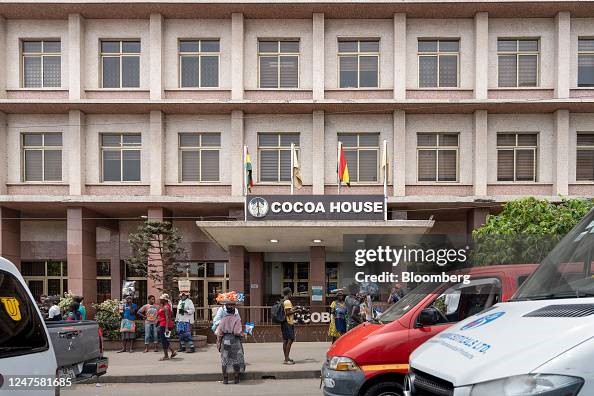

The Ghana Cocoa Board (COCOBOD) has settled GH¢2.306 billion in financial commitments to investors affected by the Domestic Debt Exchange Programme, fully satisfying its mandatory COCOBOD DDEP bond obligations for 2026.
According to an official statement, the disbursement of GH¢2,306,202,372.09 forms a primary component of the cocoa regulator’s balance-sheet restructuring and long-term liquidity management strategy.
This recent payout follows a GH¢376.33 million coupon settlement executed in March 2026, elevating total payments disbursed by COCOBOD to DDEP bondholders in 2026 to GH¢2.683 billion. COCOBOD 2026 DEBT SETTLEMENT BREAKDOWN
| March 2026 Coupon Payment | GH¢376.33 million |
| August 2026 DDEP Settlement | GH¢2,306,202,372.09 |
| Total 2026 DDEP Disbursed | GH¢2.683 billion |
| July 2026 Non-DDEP Cocoa Bills | GH¢162.00 million (Fully cleared) |
Clearing non-DDEP cocoa bills and restoring market trust
In addition to fulfilling its primary COCOBOD DDEP bond obligations, the regulator completely settled GH¢162 million in July 2026 owed to holders of Cocoa Bills who opted out of the debt exchange framework. This final payment extinguished the Board’s outstanding liabilities toward non-DDEP individual and institutional investors.
These coordinated capital settlements represent a key step toward mitigating credit exposure across the domestic banking system, aligning with fiscal stabilisation targets overseen by the Ministry of Finance Ghana.
Macro-economic impact and financial sector liquidity
By meeting its Cocobod DDEP bond obligations, the state cocoa buyer has injected over GH¢2.8 billion in direct liquidity into local financial markets. The capital inflow provides immediate balance-sheet relief to:
- Commercial banks holding sovereign-linked debt assets
- Private pension fund managers and insurance firms
- Retail investors and capital market intermediaries
While the capital injection strengthens banking sector solvency and liquidity ratios, substantial debt-servicing demands continue to test the Board’s operational cash flow.
Maintaining balanced debt management without constraining primary cocoa purchases, farmer input subsidies, or rural infrastructure investment remains essential for safeguarding Ghana’s cocoa export earnings and broader macroeconomic stability.


[…] Minister Dr Cassiel Ato Forson and COCOBOD Chief Executive Officer Dr Randy Abbey took turns at the investor engagement to outline the […]