

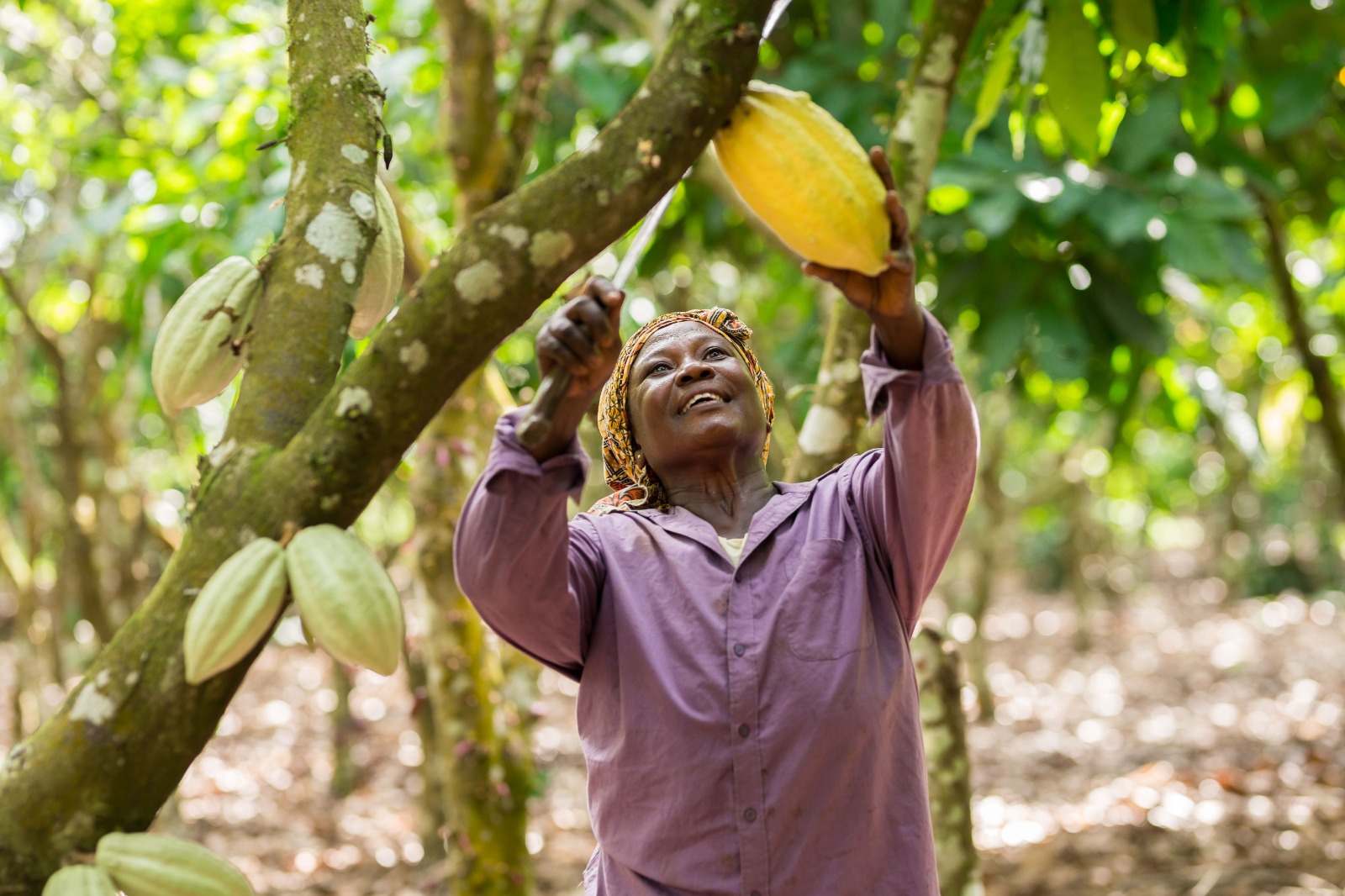

Fairtrade Africa will bring together cocoa producer organisations, buyers, policymakers and other industry stakeholders in Accra for Change Day 2026 as concerns grow over falling cocoa prices and rising production costs for farmers.
The event is scheduled for Thursday, August 27, 2026, alongside Fairtrade Africa’s Annual General Assembly.
The gathering comes at a difficult time for cocoa farmers across West Africa. Although global cocoa prices have fallen sharply since late 2024, the decline has not been matched by a reduction in the cost of producing cocoa.
For many smallholder farmers whose livelihoods depend on the crop, the combination of lower prices and rising production costs has intensified financial pressures. Many farmers continue to receive prices below what is required to achieve a sustainable living income.
New benchmark for cocoa farmer incomes
This year’s Change Day follows the publication of the 2026 Fairtrade Living Income Reference Prices for Ghana and Côte d’Ivoire.
The two countries collectively account for roughly 60% of global cocoa production, making developments in their cocoa sectors significant for the wider global industry.
According to Fairtrade Africa, the reference prices provide an evidence-based benchmark for determining the level of payment required to close the gap between prevailing farm-gate prices and the income farmers need to maintain a decent standard of living.
“For too long, market volatility has made it harder for farmers to plan for a stable, living income. The Fairtrade Living Income Reference Price gives the industry a clear benchmark for closing that gap,” said Paul Colditz, Commercial Director of Fairtrade Africa.
Fairtrade model combines price support and investment
Fairtrade Africa represents nearly 1.5 million farmers and workers across more than 700 Fairtrade-certified producer organisations on the continent.
The organisation operates through four regional networks covering West, Southern, Eastern and Central Africa, as well as the Middle East and North Africa.
Its approach is built around three key mechanisms.
The Fairtrade Minimum Price provides a price floor intended to protect producers against severe market downturns.
The Fairtrade Premium provides additional funds directly to producer organisations, which can use the money for community projects, business development and social improvements.
The newly introduced Living Income Reference Price provides buyers with a specific benchmark to work towards when determining cocoa prices, rather than relying solely on broader commitments to farmer welfare.
Campaign to target cocoa buyers and brands
Change Day 2026 will also launch a wider business-to-business campaign running through September.
The campaign will target cocoa buyers, processors, chocolate manufacturers and retailers, with Fairtrade Africa seeking to make the case that sourcing on Fairtrade terms can contribute not only to improved farmer incomes but also to long-term supply-chain resilience.
The cocoa industry is facing several structural challenges, including an ageing farming population, climate pressures and increasingly stringent due-diligence requirements such as the EU Deforestation Regulation.
These factors are reshaping the economics of cocoa production and sourcing, increasing the importance of sustainable supply chains.
Farmers to engage directly with industry
A key feature of the event will be bringing the voices of cocoa farmers and workers directly into discussions with the companies purchasing their produce.
Fairtrade Africa said the engagement is intended to help bridge the gap between commercial pricing decisions and the realities faced by farmers at the production level.
Journalists will also have an opportunity to engage directly with farmers and cooperatives through field visits to cocoa-growing communities on Wednesday, August 26, a day before the main Accra event.
The visits are expected to provide first-hand insight into the challenges confronting cocoa-producing communities and the economic realities behind global cocoa supply chains.


[…] Global cocoa market prices sat at approximately $6,636 per metric tonne in August 2026—a sharp decline from the peak of $12,000 per tonne recorded in December 2024. While black pod disease and erratic weather patterns have disrupted crop output across West Africa, the long-term risk to traditional farming comes from bioreactors in California, Israel, and Switzerland pioneer lab-grown cocoa as a farm-free supply alternative. […]