


The Ghana Investment Promotion Authority (GIPA) and the Ghana Union of Traders Association (GUTA) have agreed on measures to strengthen the protection of Ghana’s informal retail sector, which is legally reserved for Ghanaian citizens under the GIPA Act, 2026 (Act 1117).
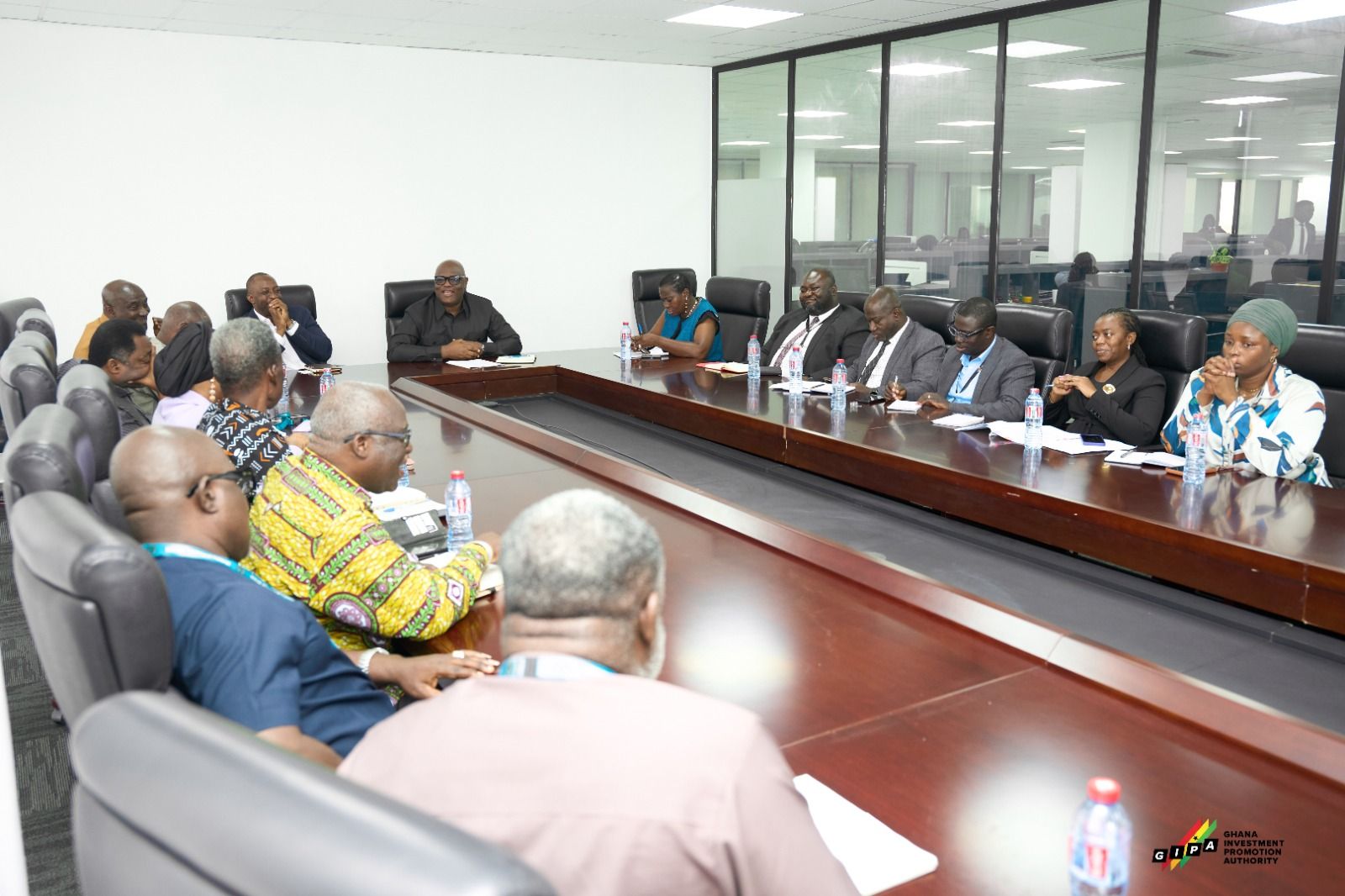
The agreement followed a strategic meeting convened under the direction of the Ministry of Trade, Agribusiness and Industry (MoTAI) and led by GIPA Chief Executive Officer, Simon Madjie.
The meeting brought together GIPA officials, GUTA national executives, representatives of MoTAI’s Internal Trade Unit and other stakeholders to discuss ways to improve enforcement and prevent foreigners from operating illegally in areas reserved for Ghanaians.
Informal retail reserved for Ghanaians
Mr Madjie reiterated that activities within Ghana’s informal retail sector, including open markets, kiosks, small shops and similar businesses, are exclusively reserved for Ghanaian citizens.
He explained that Ghana remains open to foreign investment in the formal retail sector, including supermarkets and shopping malls, provided investors comply with the country’s investment laws.
GUTA also stressed that it supports legitimate foreign investment but wants the law to be enforced against businesses operating in reserved sectors without authorisation.
GIPA, GUTA raise concerns over fronting
A major concern raised during the meeting was the practice of fronting, where Ghanaian individuals or companies allegedly allow foreigners to use their names or corporate structures to operate businesses in sectors reserved for Ghanaian citizens.
GUTA President Clement Boateng said the association has no objection to foreigners who comply with Ghanaian investment laws.
However, he argued that foreign businesses that do not meet the legal requirements should not be allowed to operate in markets reserved for Ghanaian traders.
The stakeholders also reviewed the sanctions contained in the GIPA Act, 2026.
Under Section 56(3), a non-citizen or non-wholly Ghanaian-owned enterprise operating in a reserved sector may face an administrative penalty of between 5,000 and 10,000 penalty units, as well as an additional monthly penalty of between 500 and 1,000 penalty units for as long as the violation continues.
Based on the current statutory value of GH¢12 per penalty unit, the initial penalty could range from GH¢60,000 to GH¢120,000, with additional monthly penalties of up to GH¢12,000.
Section 55(1)(a) also makes it an offence to let or sublet a market stall or store to a foreigner for trading purposes. A person convicted of the offence may face a fine of between 2,000 and 4,000 penalty units.
Task force proposed to strengthen enforcement
As part of the proposed roadmap, GIPA and GUTA agreed to consider reviving and strengthening an inter-agency task force involving GIPA, MoTAI, local government authorities, security agencies and other relevant institutions.
The organisations are also considering the creation of a dedicated monitoring and enforcement unit.
A direct reporting mechanism could also be introduced to enable traders to report suspected cases of foreign-owned informal retail businesses and fronting.
The two bodies further proposed a public education campaign to inform traders, businesses and foreign investors about the legal requirements governing Ghana’s informal retail sector.
Diplomatic engagement also planned
The meeting also considered diplomatic engagement with foreign missions in Ghana.
Under the proposal, the Minister for Trade, working with the Ministry of Foreign Affairs, would engage diplomatic missions to explain Ghana’s investment laws, clarify the country’s position and discuss its obligations under ECOWAS arrangements.
The initiative would also encourage foreign governments to educate their nationals about the legal requirements for doing business in Ghana.
GIPA and GUTA said continued cooperation would be necessary to protect livelihoods in Ghana’s informal retail sector while maintaining a fair and orderly investment environment.
Both organisations reaffirmed their commitment to enforcing Ghana’s investment laws and ensuring that businesses operating in reserved sectors comply with the law.