

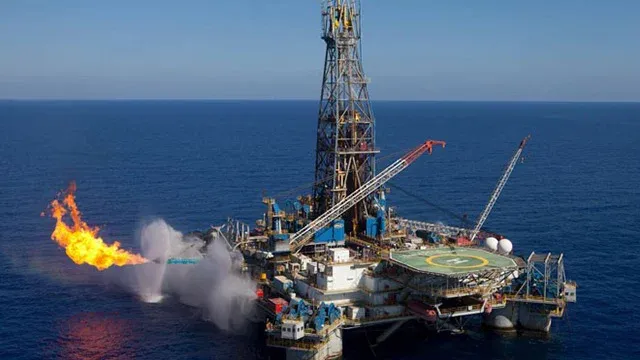

The most immediate challenge facing Ghana’s upstream petroleum sector is the decline in oil production and the depletion of the country’s reserves, Energy and Green Transition Minister Dr John Jinapor has said.
Speaking at the annual general meeting of the Ghana National Petroleum Corporation (GNPC), Dr Jinapor said Ghana’s major producing fields — Jubilee, TEN and Sankofa Gye Nyame — remain critical to the country’s petroleum output but are now mature assets requiring more advanced reservoir management and additional investment.
He said Ghana’s gross petroleum reserves fell from 860 million barrels of oil equivalent (MMboe) in 2024 to 826 MMboe in 2025, while contingent resources also recorded a significant decline.
Although the reserves remained above the government’s target, Dr Jinapor said the downward trend was a concern because every barrel produced must increasingly be replaced with new reserves.
Government targets faster development of oil resources
Dr Jinapor said government would work with GNPC, the Petroleum Commission and industry operators to accelerate field development, appraisal and exploration.
He said efforts would also focus on improving the pace of regulatory approvals, addressing infrastructure constraints and creating a more predictable environment for investment.
The objective, he explained, is to move already discovered resources into production more quickly while creating the conditions for new discoveries.
According to the minister, GNPC’s focus on projects including Pecan, Eban-Akoma, Afina, Pecan North, Almond and Beech, as well as the Eban-Akoma Plan of Development and amended TEN Plan of Development, will be important in replacing declining reserves.
He added that near-field opportunities could also contribute to sustaining production.
Ghana explores new approaches to oil and gas development
Dr Jinapor said Ghana must adopt a deliberate approach to exploration and upstream investment if the country is to maintain adequate reserves.
He called for innovative approaches to developing marginal and stranded resources, including the use of production hubs and shared infrastructure.
He also said exploration of frontier areas such as the Voltaian Basin should continue with appropriate technical discipline and risk management.
“The objective,” he said, is to pursue exploration capable of generating commercially viable reserves and sustainable production.
GNPC records stronger financial performance
The minister also highlighted GNPC’s financial performance in 2025 as evidence that stronger commercial discipline can produce results despite difficult market conditions.
GNPC’s profit after tax increased by 24.88% to US$374.99 million, even though the average achieved crude oil price declined from US$81.15 per barrel to US$69.47 per barrel.
Dr Jinapor said the government expects the improvement to be sustained through disciplined capital allocation, tighter cost management, stronger project controls and improved revenue collection.
He urged GNPC to operate with the financial discipline expected of a commercially oriented national oil company while continuing to fulfil its strategic role.
Major investments, he said, must undergo rigorous commercial assessment, with risks properly priced and capital directed towards projects capable of generating sustainable returns and strengthening Ghana’s energy security.
GNPC urged to strengthen operatorship capacity
Dr Jinapor further identified the strengthening of GNPC’s capacity as an operator and commercial institution as a government priority.
He said Ghana should not indefinitely depend on international operators for all aspects of upstream petroleum development while seeking to maximise the value derived from its natural resources.
He also noted that the global energy industry is changing rapidly due to climate policies, carbon management requirements, technological developments and shifting investor expectations.
Ghana, he said, must therefore avoid both an abrupt abandonment of its petroleum resources and a passive continuation of business as usual as it seeks to manage the future of its oil and gas sector.


[…] and Green Transition Minister, Dr John Abdulai Jinapor, says renewed interest from international investors signals growing confidence in Ghana’s […]
[…] to him, the Ghana National Petroleum Corporation (GNPC) and the Ghana Revenue Authority (GRA), alongside other relevant stakeholders, participate in […]